According to Fortune magazine, on 7 July this year, Kevin Bharti Mittal, founder and chief executive officer of the science and technology start-up company Hike, was in the forefront of thinking about the vision of “the country of the game” — a player, not just a platform player, who could have the value they created, writing: “This is our mooning plan, creating an online country where every participant can share the results, turning attention into real value, and making the web effect benefit everyone.”
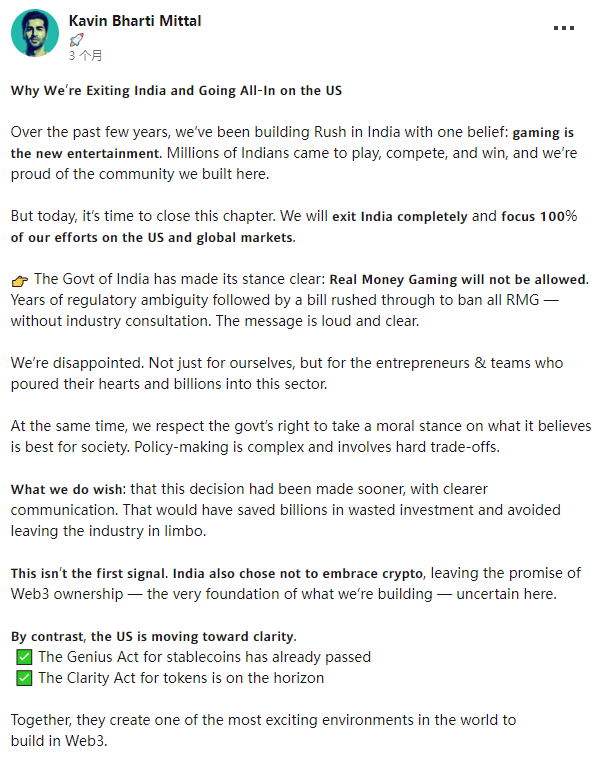
Two months later, the dream collapsed. On 13 September, Kevin Batti Mithal announced, in another letter from the Prime Minister, the official closure of Hike following the abolition of over 100 employees of Rush, a genuine game platform. It was the Promotion and Regulation of Online Games (PROGA) Act of 2025, which completely destroyed the Indian gold game industry. “The vision of the country of the game is real, but it may be too early to say,” Kevin Batti Mithal, who was frank and added that the gold game was never the ultimate goal, but a testing ground for unit economics and user growth. “After all,Starting in India, we have been locked in this pattern and in a regulatory backwind, turning the temporary path into a permanent dilemma.“The timing of the introduction of the legislation is terrible. At a time when the threat of artificially intelligent employment is causing widespread concern, some 7,000 jobs have been lost within 30 days. Large-scale lay-offs of small businesses (approximately 5,000); actual data are still being assessed in the game industry. Many enterprises and employees face an uncertain future.
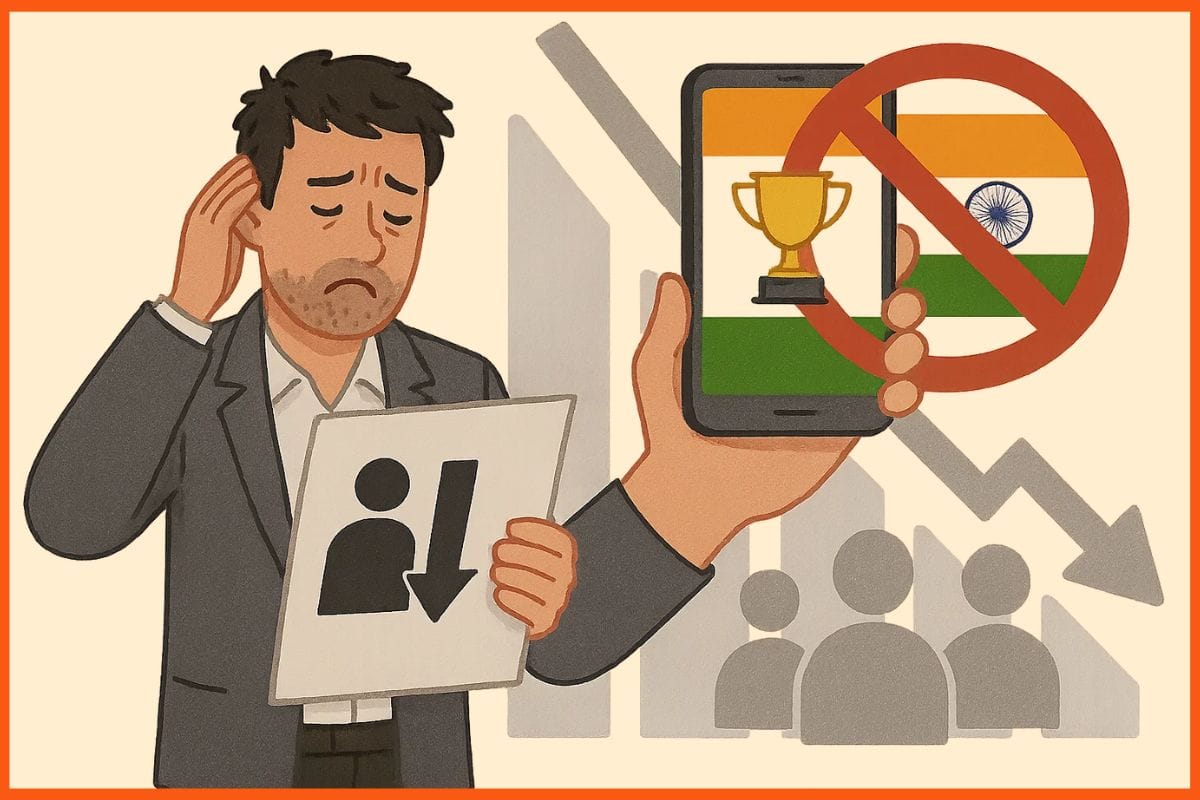
With a few exceptions, most companies have initiated lay-offs: 400 from My11Circle parent company, James24x7, 600-700 from MPL, India ‘ s second largest gold game platform, and about 30 per cent from leading players such as WinZO and Zupee. A Hyderabad technician, who had spoken anonymously because of the company’s severe injury, said: “People lose their jobs overnight, and this method of enforcement is unreasonable. I’m still trying to find a job.”
The early United States speculation agency Bitkraft, which focused on interactive video games, recently announced 120 staff reductions. Other companies rapidly transitioned: Dream 11 parent company launched the financial services platform Dream Money; WinZO built the short play platform to go to the United States Content Market; and Zupee cut into the field through Zupee Studio.

The genuine gold game, which was a windfall industry, contributed 80 per cent of the $3.5 billion income of the online game market in India in 2024 with over 100 million users. A compound growth rate of 28 per cent per year between 2020 and 2024 is expected to continue at 12-15 per cent over the next five years. The impact of PROGA has now spread beyond the game ecology. According to incomplete statistics, Rs. 38 billion (approximately US$ 458 million) of the user’s deposits were missing, government taxes evaporated almost Rs. 10 billion (approximately US$ 120 million) and online games in 2025 contributed Rs. 250 billion directly or indirectly to India. This is compounded by the fact that online gold games are classified in GST 2.0 as “criminals” in the same category as tobacco, which applies to a 40 per cent tax rate. The pending dispute over the Rs. 2.5 trillion GST could become the “last straw” in the crisis-busting industry. Despite the sunset, the Indian Government ‘ s position on the real-time PROGA framework is clear: the gold game has caused extensive financial and psychological harm. High-level ministers stated that new regulatory bodies and strict rules would protect families, adolescents and the public, curb addiction and debt and save countless lives. The Federal Minister for Electronics and IT of India, Ashwini Vaishnav, in consultation with the gaming company, undertook to continue to amend the law, if necessary, and to ensure that most stakeholders were fully informed before and after the bill was enacted. Following the consolidation of public opinion, the Ministry of Electronics and Information Technology will finalize the release of PROGA in November, mainly in response to the restructuring of the national and international gold game companies. Under the Act, an online game authority will be set up in India, with members from the Ministries of Home Affairs and Foreign Affairs, to manage the electric competition and social play companies, while also exercising quasi-judicial functions of civil court powers. The fallout of the true gold game is bound to leave a vacuum, but the electricity industry, with a global scale of $16.5 billion and an audience of more than 500 million, is opening up. During the epidemic, electric competition surged among young people in India, and many countries have recognized their sporting standing, and in 2022 the Asian Games will make it a medal project. The first Olympic Electronic Games are also scheduled to be held in Riyadh in 2027.
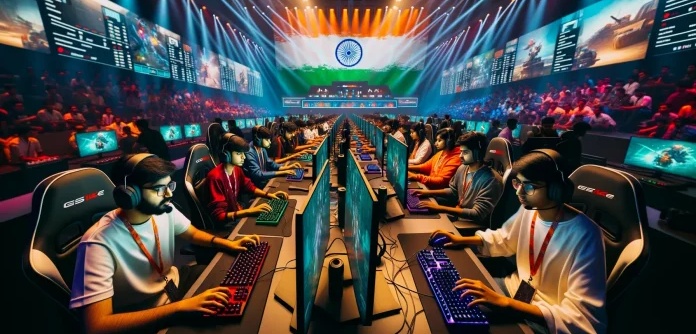
But can the competition bear the impact of the gold game ban?Industry observers point out that the Indian game market is re-emerging the 2008-09 scenario in China — regulation forcing companies to transform electric competitions and video games, which eventually gave rise to global game giants. Indian Prime Minister Modi, convinced of India’s potential to dominate the global electricity market, stressed: “The game is right and gambling is harmful. With the right approach, India can dominate the global online game market, with huge employment opportunities in it.” The experts considered PROGA to be a milestone for the competition — the first official recognition in this field and a clear distinction from the genuine gold game. However, Ahna Mehrotra, the founder of AM Sports Law and Management Corporation, pointed out the limitations: “The electronic competition project, which includes only a composite event, is legitimate, but it is not a typical way of organizing the event. Many of the top-level events are held independently, and follow-up depends on the clarification and expansion of the definition of `complex event’.” With regulatory certainty, brands and distributors can work together for many years to translate into greater opportunities for players and creators, more predictable income flows and greater international visibility. Animesh Agarwal, co-founder of the Bombay Electric Competition Club S8UL, rejected the fact that: “The true gold game seeks immediate results and short-term satisfaction, and the competition requires constant training, record-keeping and athletes’ thinking.” He believed that such migration would allow for the selection of truly motivated athletes through the grass-roots competition and training system. The main organizer of the competition, Nodwin Gaming, co-founder Akshat Rathee, shares this view, arguing that an influx of people would broaden the base of leisure players rather than dilute the playing field, “they may not necessarily produce professional players, but they will deepen the base of fans — which are the support of sponsorship, media copyrights and derivatives”.The competition was hailed as India’s next youth media growth story.There is at least theoretical potential for replicating the gold game. The Indian electricity competition market, valued at Rs. 11 billion in 2024, is expected to grow by 35 per cent over the next five years, driven by live broadcasting, sponsorship and competition copyright. Free hand-shows also dominate download lists, and moderately heavy player base and policy support of 200 million can attract more brands and distributors. However, Ahna Mehrotra reminds: “The ban on Jedi Survival in 2022 remains an obstacle and urgent need for stakeholder consultation to use global best practices to address integrity challenges.”

Indian specialty PUBG game reopened in May this year.
The Razor Advisory Report noted the need to bridge the gap between “play quality, user activation and ecological construction”. Akshat Latti emphasized the challenge of infrastructure development: “We already have the players who have proven their strength in international electricity competitions, and what is missing are the scalable infrastructure — the electric arena in the second and third-line cities, better network equipment, more systematic training institutions. This is precisely the direction in which brand finance and public-private partnerships need to focus.” Yet the profit model remains a challenge. According to Jain, expert from Grant Thornton, “Golden games provide high-frequency cash earnings, with electric competitions concentrated on a few projects. Free games rely on advertising and in-service purchases, with single users earning less than $3, far lower than the $35 of a genuine game.” In addition, there is a need for “Indian manufacturing” to promote sustainable national fans and innovative profit models. The promotion of indigenous original Indian games was seen by experts as a key to differential competition. Rajan Navani, founder of JetSynthesys, summed up three main directions of focus in India: Establishment of electric competition bases in major cities; stimulation of indigenous studios to develop original IPs rooted in Indian culture; and strengthening of productive cooperation to ensure talent transfer in design, coaching, race management, etc.
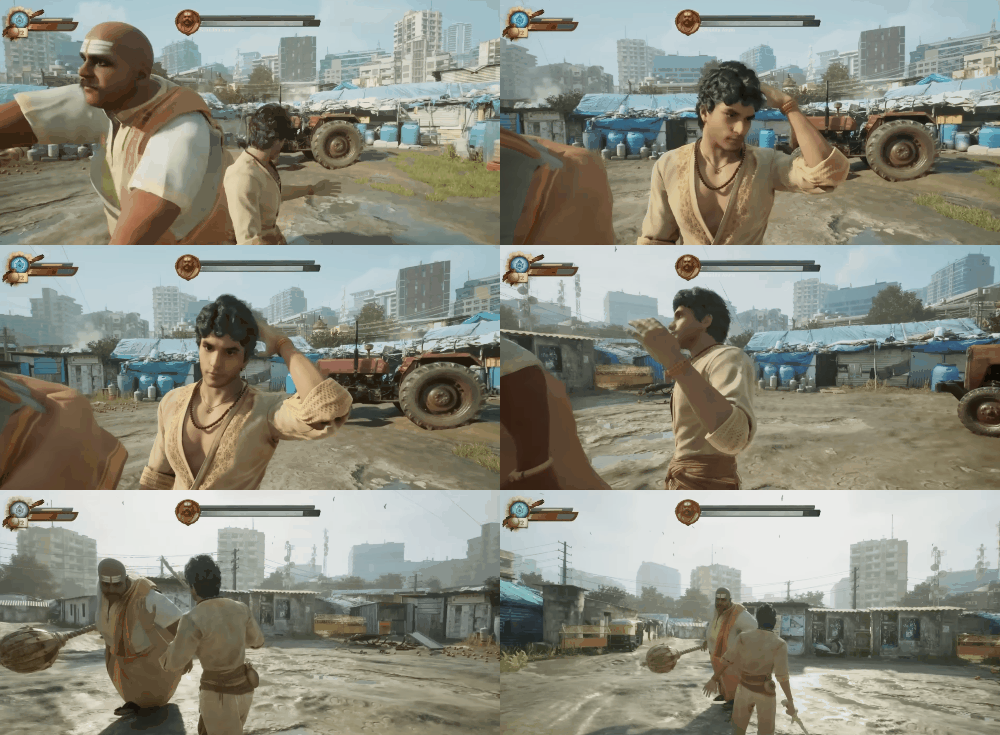
India’s first “3A” game, Unleash The Avatar, by shunning.
When the gates of the true gold game are closed, is the electric revolution coming? All the elements are in place, and the challenge is to direct the definition of the size and innovation of the true gold game to the development of the electric and indigenous games.