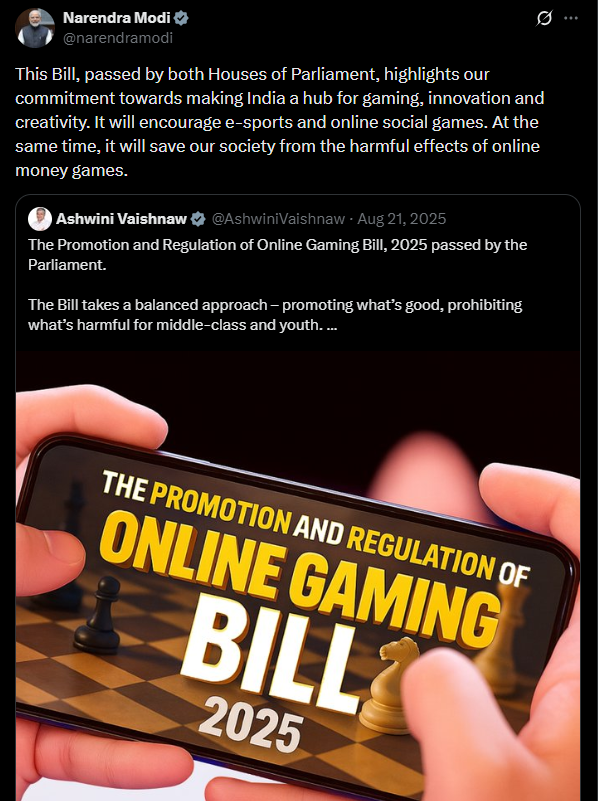
In 2025, the Indian online lottery industry experienced the most dramatic changes in recent years. The Online Game Promotion and Regulation Act (PROGA) was passed and the total ban on gold games across the country led directly to the closure of the main platform and to the restructuring of the regulatory and tax system, forcing enterprises to transform or completely exit the Indian market.
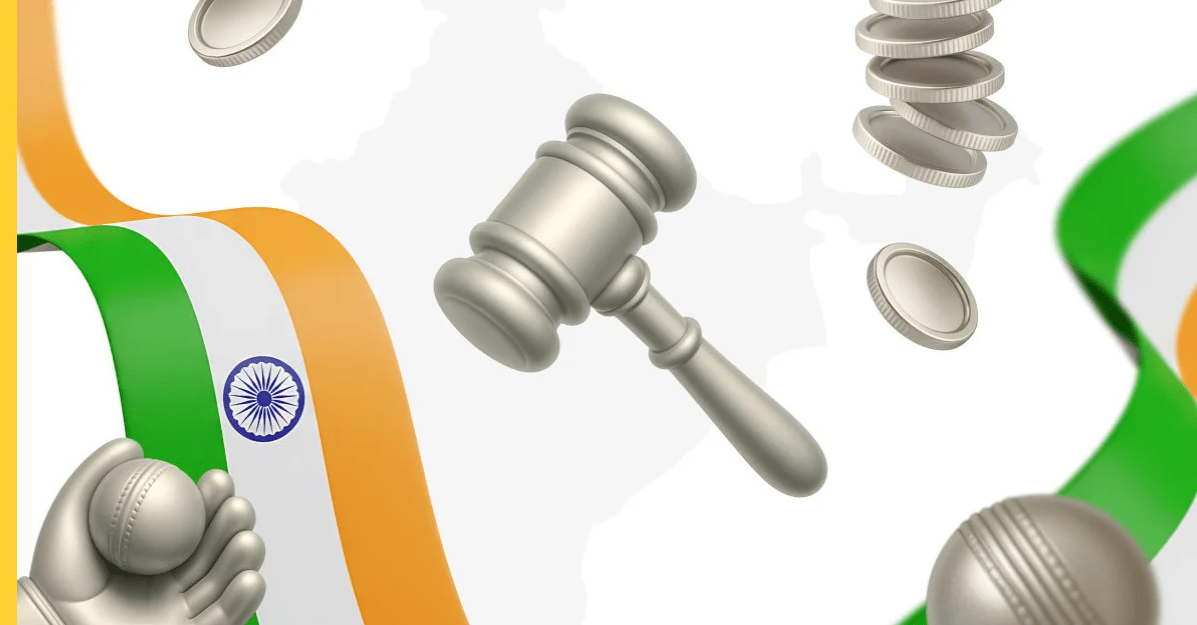
The gold game ban is in effect.The most subversive change in 2025 was the introduction of the PROGA Act. At the legal level, all online games involving money bets in India are prohibited, regardless of whether they are classified as skill or luck games, covering fantasy sports, poker, radials, casinos and bet applications. Financial institutions are prohibited from dealing with transactions related to such games, offenders face fines and imprisonment for up to three years, and the promotion of genuine game services carries legal risks. In an interview with SIGMA, an iGaming expert George John said: “The bill introduced for the first time a structured framework for the regulation of genuine gold games in India, with an emphasis on compliance and stricter measures aimed at increasing transparency in the industry. Its long-term impact will depend on the efficiency of the operator’s adaptation to new requirements.” Legislators defended the ban on the grounds of addiction, financial harm and fraud, and the Government estimated that hundreds of millions of Indians were affected by online gold games, with a cumulative loss of Rs. trillion (approximately tens of billions of dollars).The fall in industry revenuesBefore the ban, the online game market in India had grown rapidly. A joint report by the Confederation of Indian Industries and Ernst and Young-Wing indicates that 488 million online players were expected to continue to grow in 2024. Of these, over 155 million players participated in genuine gold games (including dream sports, Rami and poker) and around 110 million active players in 2024.

Analysts estimate that India ‘ s online game industry is valued at between $3.6 billion and $3.7 billion by 2025 and that revenue is expected to continue to grow in the coming years. The genuine gold game, which contributes about 80 per cent of the total revenue of the industry, is a central driver of growth. The Indian service company Grant Thornton Bharat, partner and head of the media industry, Ananay Jain, states: “The bill is a double-edged sword for the industry. It legitimizes electronic competition and skill-based games, promotes career development, content creation and education, while reducing legal uncertainty and stimulating innovation through clear regulation. But it also increases the burden on businesses, and small start-ups and emerging developers may be in financial distress because of compliance costs, fines and regulatory requirements.” Following the entry into force of the ban, platforms relying on genuine gold games were suspended, the legal online game market (including fee-based competitions or bets) shrunk sharply, and income fell off the cliff.Platform shut down.Indian domestic and international operators responded quickly to the ban. The largest dream sports platform in India, Dream11, which had previously been valued at nearly $8 billion, announced the closure of the gold game business to de-monetized services and derivatives. Mobile Premier League, Zupee, PokerBazi and My11Circle platforms have also suspended or terminated gold games in India to comply with the new law.

The Chief Executive Officer of India’s Advertising Standards Commission, Manisha Kapoor, stated: “The new Act expressly prohibits any online games involving real money, based on concerns about public health and financial risks. But at the same time, the bill encourages innovation in games that do not involve real money. We look forward to a framework for new regulators to balance consumer protection with the growth of industry innovation.” Some operators, such as the PokerBaazi parent company, have chosen to abandon legal challenges and explore free business models; others have completely terminated Indian operations, such as the WPT Global international poker platform, which has left the market because of its regulatory environment.Tax and regulatory system transitionPrior to the ban, online games involving money were subject to full payment of 28 per cent of the goods services tax on bets, which, combined with a tax on the source of the winner, had affected players ‘ behaviour and the distribution of income in the industry. Following the ban, the goods service tax applies only to cases where the platform collects a service fee for non-real money games, and 18 per cent is applied to the service fee for electric and social game products that do not involve registration fees or bets. The PROGA Act also calls for the establishment of a central online game authority, which is responsible for the registration of classified games, the handling of litigation, the issuance of codes of conduct and the closure of illegal play platforms under the Information Technology Act. The penalties were extended to business executives, and law enforcement was empowered to investigate and seize the assets involved.Impact on employment and investmentIndustry associations warned that the ban could lead to significant employment losses and a decline in foreign investment. It is estimated that there are more than 200,000 jobs directly associated with Indian gold games, involving over 400 start-ups and related service providers. Foreign direct investment (FDI) that had previously entered the field exceeded Rs. 2.5 trillion (approximately US$ 27.7 billion) and the outlook was uncertain as capital re-evaluated the regulatory environment in India.
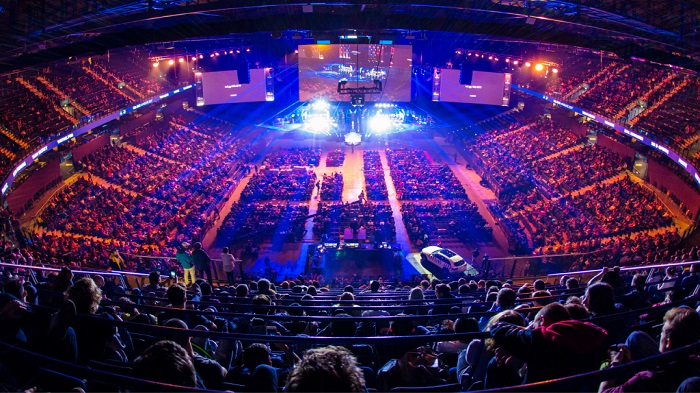
The industry had taxed between Rs. 2 trillion and Rs. 3.1 trillion in the previous year, and the ban was expected to shrink significantly. The Government of India expects to lose indirect taxes and state taxes associated with online lottery activities.The gaming and betting platform is down.Following the implementation of PROGA, online poker and casino games lost their full legal status, operators were forced to suspend the relevant products and payment channels were closed. The use of bets and gambling in long-sustained grey areas is also on the ban list, and international platforms are being removed. This brought to an end the long-standing struggle of Indian industry for a “technological game and a game of luck” and declared all online gold games legally prohibited.The game of electric competition and leisure is a new directionAlthough it is forbidden to hit the gold game, the Act specifically allows and accepts the forms of competition, social and educational games. The Government has positioned the competition as a growth block, providing development space for competitive games, training, competitions and prize-based championships that do not involve registration fees. Industry stakeholders noted that formal recognition would help to raise India ‘ s position in global competitive games, but that the profit model needed to be adapted to the new law.